Barcelona Day Tours
I’m Serious Day Tour Man AI, your day trip expert. Ask me anything — where to go, how to get there, and what’s actually worth your day.
Barcelona’s headline day trip runs on a seven-hundred-year-old schedule: the Escolania boys’ choir has sung at Montserrat since the fourteenth century, keeps a school calendar that empties the basilica stage without warning — check the day’s times before you build the trip around them. The mechanics are below.
The rest of the radius: Dalí’s own theatre-museum under its egg-topped dome, a walled cathedral city television made newly famous, Roman Tarragona on its seaside cliff, and the cellars where cava was invented — reachable, pleasingly, by commuter train. The city block covers the Sagrada Família booking reality and the pickpocket honesty.
Here’s what’s worth a day, with real times and honest trade-offs.

Popular Day Trips

Montserrat
A serrated mountain and a working monastery, 90 minutes out

Girona & Figueres
One rail line, two different days — the walls, then Dalí

Sitges
Seventeen beaches, forty minutes down the coast
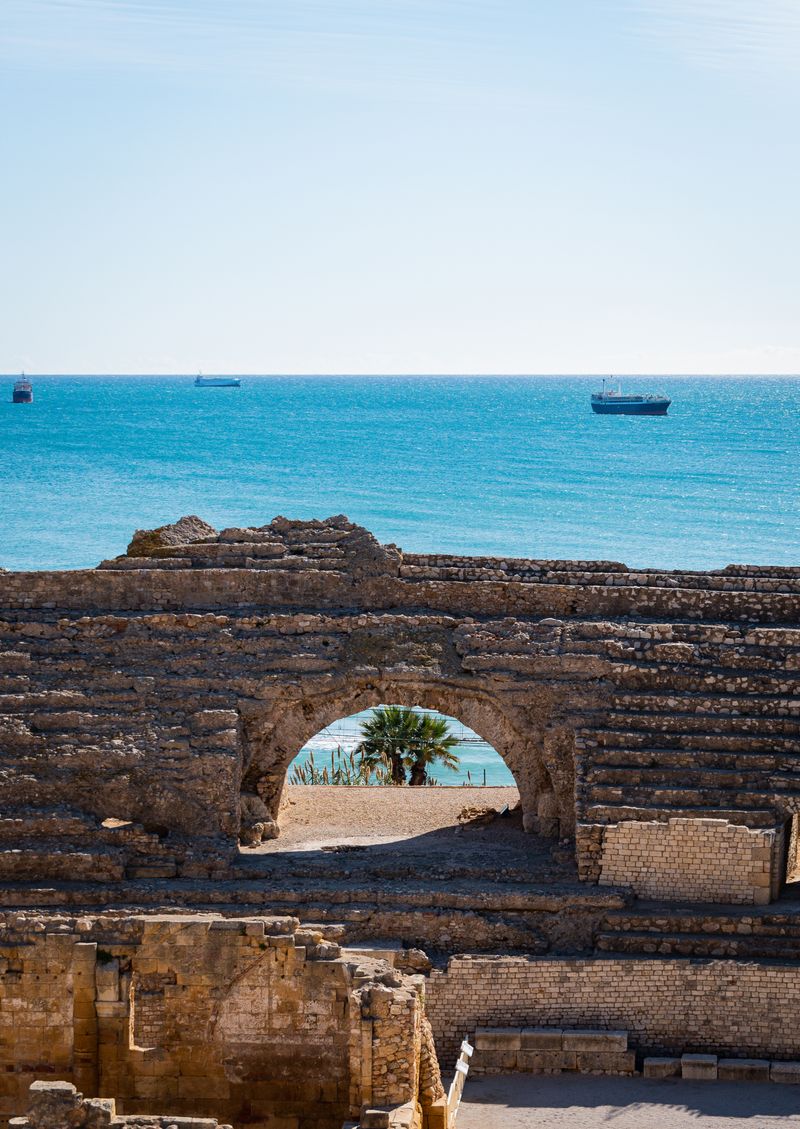
Tarragona
Rome’s oldest city in Spain, amphitheatre on the seafront

Cadaqués
The whitest village on the Costa Brava, two and a half hours out
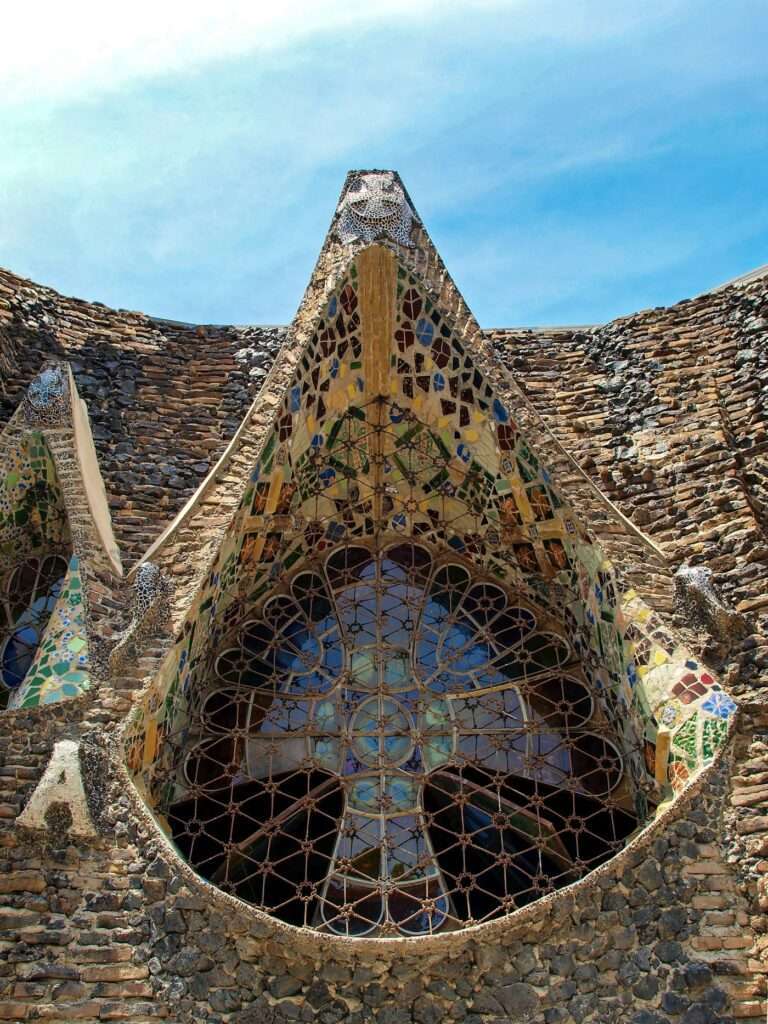
Colònia Güell
The crypt where Gaudí worked out the Sagrada Família
Montserrat — The Mountain, the Madonna & the Choir
An hour northwest, Montserrat stacks a Benedictine monastery into a sawtooth mountain, and the day builds from three decisions. The transport: the R5 train from Plaça d’Espanya connects to either the rack railway (the gentler, view-forward climb) or the Aeri cable car (the faster, steeper thrill) — combination tickets bundle the choice with the summit funiculars. The Madonna: La Moreneta, the twelfth-century Black Virgin, receives her queue in the basilica’s alcove — the line moves steadily, and the touch-the-orb ritual explains its polish. The choir: the Escolania performs in the basilica around midday on school days (evening hours on Sundays and holidays), the schedule follows the school calendar and pauses without ceremony, and choir-inclusive tickets with seating want booking ahead — verify the day’s times on the official Montserrat visit site before anchoring the trip to them, and arrive fifteen minutes early regardless.
The mountain half: the Sant Joan funicular opens the ridge walks — the hour’s loop to the hermitage viewpoints turns the monastery into a model below — and the Museum of Montserrat’s Caravaggio-to-Picasso holdings outperform every expectation of a mountaintop collection. The rules: weekday mornings run calmest, the mountain makes its own weather (a layer rides along), and the market stalls’ mató honey cheese is the right summit snack. Full day, engineered around the choir.
Girona & Figueres — Walls and the Surrealist
The northern rail double runs on one high-speed line. Girona first, thirty-eight fast minutes out: the old city stacks a honey-stone cathedral (the widest Gothic nave anywhere) over lanes that carried a thousand years of history and, lately, a certain television series’ Braavos scenes — the Jewish quarter’s Call is among Europe’s best preserved, the Arab Baths keep their Romanesque lantern, and the full wall walk (free) reads the Pyrenees from the ramparts. The Onyar’s painted riverfront houses supply the postcard from the Eiffel-built footbridge.
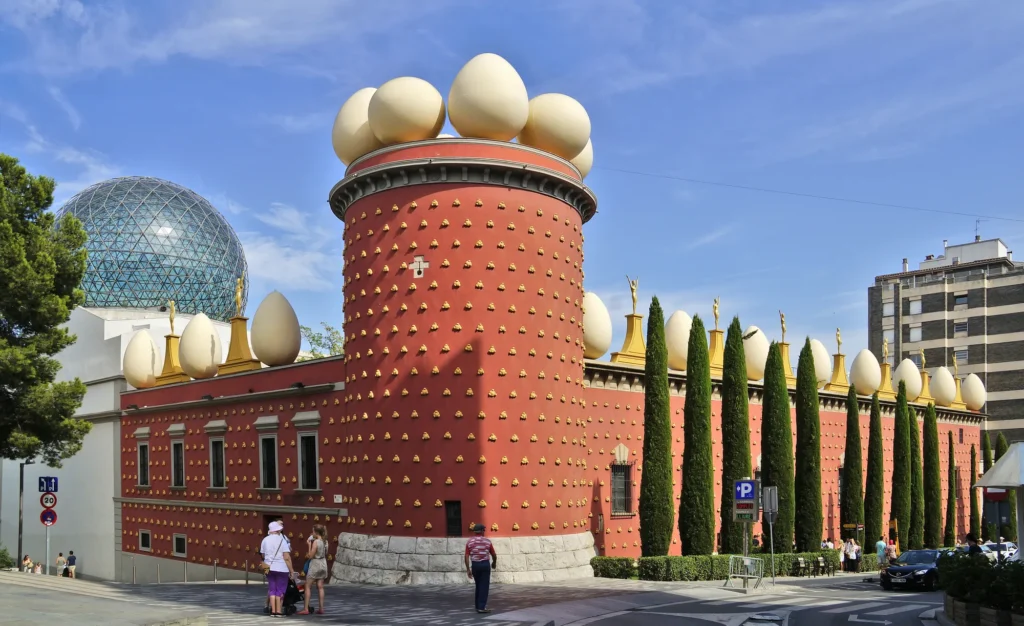
Figueres, fourteen more rail minutes: the Dalí Theatre-Museum is the artist’s own self-built monument — the world’s largest surrealist object, egg-crowned and tuna-red, where he staged his collection and himself (he’s buried in the crypt, center stage). The Mae West room’s face-by-furniture, the rainy Cadillac, and the jewels annex complete the argument. The mechanics: timed tickets on the Fundació’s official site, booked ahead in season; the museum fills ninety unhurried minutes and converts surrealism skeptics most of all.
The frame: Girona morning, Figueres afternoon, high-speed home — two cities, one rail line, home by dinner. Beach-inclined travelers trade Figueres for the Costa Brava’s coves (Calella de Palafrugell by summer bus) and lose nothing but the mustache.
Read the full Girona and Figueres day-trip page.
Sitges — The Beach Town That Knows Itself
Thirty-five minutes down the coast by frequent Rodalies train, Sitges is Barcelona’s polished escape: seventeen beaches strung under a whitewashed old town, the church-on-the-point silhouette that anchors every photograph, and a hundred-year reputation for tolerance that made it one of Europe’s great LGBTQ-friendly resorts — a fact the town wears as identity, not marketing.
The circuit: the Passeig Marítim’s palm promenade, the Museu Cau Ferrat (Santiago Rusiñol’s house-studio, the Modernisme movement’s clubhouse, El Grecos on the wall), the Maricel’s sea-window galleries, and the old-town lanes’ boutique economy. The beach sort runs by flag and taste — the central strands for ease, Balmins for the mixed-and-clothing-optional register, the western reaches for space — and the xató salad with the local Malvasia is the lunch the town invented.
The calendar: February–March’s Carnival is Spain’s most exuberant after Cádiz (booked far ahead, attended deliberately), the June Corpus flower carpets dress the streets, and summer weekends import Barcelona wholesale — the weekday visit keeps the town’s own pace. The frame: the low-logistics exhale day, train-perfect, and the honest answer to Barcelona’s crowded-beach problem.
Read the full Sitges day-trip page.
Tarragona — Rome by the Sea
An hour southwest by train, Tarragona was Tarraco — capital of Rome’s largest Iberian province — and wears the empire at seaside scale: the amphitheatre sits in a grass bowl directly over the Mediterranean (gladiators fought with that horizon), the Circ’s vaulted galleries run beneath the medieval streets that grew on top, and the pre-Roman walls’ Cyclopean bases carry the archaeological walk. The UNESCO ensemble ticket strings the sites; the model in the history museum assembles the puzzle.
The upper town completes it: the cathedral’s fortress Gothic over its diocesan cloister, the Casa Castellarnau’s noble interiors, and the Balcó del Mediterrani — the iron railing where the town takes its sea view, “touching iron” for luck by local habit. The Serrallo fishing quarter grills the day’s catch at honest prices; the romesco tradition was born on this coast and behaves like it.
The calendar note: September–October brings the castells — the human towers UNESCO listed, built by rival colles in the Plaça de les Fonts with a seriousness that silences crowds — and catching a diada rehearsal or competition upgrades the trip to unforgettable. The frame: ruins-plus-lunch-plus-balcony is the day; the Pont del Diable aqueduct in its pine park adds the classic finale for drivers and bus-riders.
Read the full Tarragona day-trip page.
The Penedès — Cava by Commuter Train
Forty-five minutes west, the Penedès is the rare wine region with a train station in the cellars’ front yard: Sant Sadurní d’Anoia — cava’s capital, where the method arrived in 1872 — puts the founding houses within walking distance of the platform, which settles the designated-driver question by deleting it.
The sort: the two giants run the spectacle end — one with its Puig i Cadafalch Modernisme cathedral-of-cava cellars, the other with underground cellar-train rides through kilometers of aging bottles — book their English slots ahead and take the theatrics cheerfully; the family houses in and around town pour the connoisseur’s counterpoint, where the person disgorging the bottle often made it. The vocabulary pays for itself: brut nature is the region’s pride, the long-aged gran reservas stand up to Champagne at half the price, and the xarel·lo grape is the local answer to every question.
The stack: Vilafranca del Penedès, one stop on, adds the Vinseum wine museum and the castellers tradition at its most intense (the human-tower rivalry here is the town’s proudest tradition), and the vineyard lanes cycle gently for anyone pacing the tastings. The frame: two cellars, one long lunch, train home napping — the region’s most civilized alcohol logistics, and the honest upgrade over any coach wine tour.
The Sagrada Slots, the Pickpocket Truth & Barcelona Itself
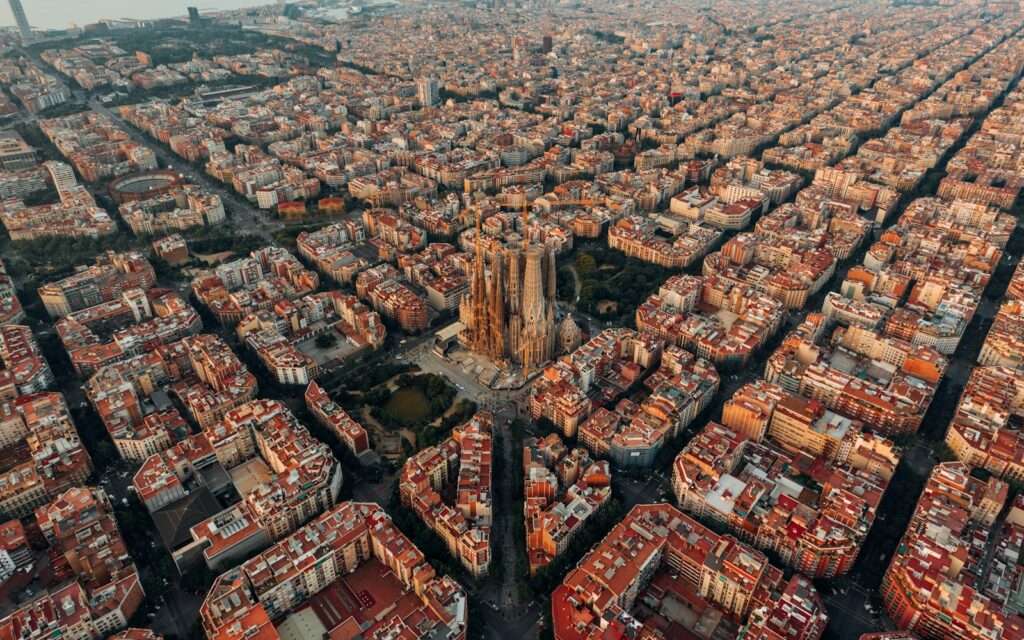
The booking realities, mechanically: the Sagrada Família sells timed tickets on the official site — days ahead in season, with the tower add-ons choosing your facade — and give the basilica the audio-guided ninety minutes it was designed for; Park Güell’s monumental zone runs its own timed entry (the free upper park needs none); and Casa Batlló and La Pedrera stagger their slots for the Gaudí-committed. The pattern is uniform: official sites, timed slots, mornings-or-evenings over midday, and the lookalike resellers marking up the same QR codes.
The pickpocket truth, stated plainly because it’s the city’s real hazard: Las Ramblas, the metro’s tourist lines, and the beach are professional theatres — phones in front pockets die, bags hang crossbody and zipped, nothing valuable sits on café tables or beach towels, and the “friendly stranger” choreographies (the map, the spilled sauce, the football trick) end the same way. Managed properly it’s a non-event; ignored, it’s the trip’s story.
The living city: the vermut hour (Sunday noon, bar counter, olives and conservas) is the local institution most visitors miss; the Boqueria feeds better at its back counters than its front smoothie stalls, and the neighborhood markets (Santa Caterina, Sant Antoni) feed better still; tapas here are Basque-import pintxos or Catalan platillos by bar, and the tourist-menu paella flag is a warning, not an invitation. Season math: May–June and September–October are the windows; August hands the city to visitors while locals decamp; La Mercè (late September) is the city’s own festival week — castells, correfocs, free everything — and the beach truth is that the sand is imported, the water is fine, and Sitges (above) is thirty-five minutes away doing it better.
Full day-trip pages: Cadaqués.
Frequently Asked Questions
When does the Montserrat boys’ choir sing?
Around midday on school days in the basilica, with Sunday-and-holiday evening hours — but the Escolania keeps a school calendar and pauses without ceremony, so verify the day’s schedule on the official Montserrat site before anchoring the trip, book choir-inclusive seating ahead, and arrive fifteen minutes early.
Is the Dalí Museum in Girona or Figueres?
Figueres — fourteen rail minutes past Girona — where the Theatre-Museum is Dalí’s own egg-crowned monument and burial place. Book timed tickets on the Fundació’s official site and pair it with Girona’s walls and Call in one high-speed day.
Rack railway or cable car to Montserrat?
Both connect from the same R5 train: the rack railway for the gentler, view-forward ride; the Aeri cable car for the fast, steep thrill. Combination tickets bundle either with the summit funiculars — take Sant Joan up for the ridge walks.
How serious is pickpocketing in Barcelona?
Serious enough to plan for: Las Ramblas, tourist metro lines, and the beach are professional grounds. Front pockets and open bags fail; crossbody-and-zipped, nothing on tables or towels, and polite disengagement from staged distractions make it a non-event.
Can you do a cava tour without a car?
Ideally — Sant Sadurní d’Anoia’s train station sits within walking distance of the founding houses, so the driver question deletes itself. Book English cellar slots ahead, add a family house for the counterpoint, and let the train home handle the nap.