Roman Tarragona
Rome’s oldest city in Spain keeps its amphitheatre on the seafront and its capital-of-Hispania swagger in the stones. An hour and a quarter down the coast — on the right train, which isn’t the fast one.
The short version
- Regional and Mediterranean-line trains run Barcelona to Tarragona’s central station in about 75 minutes at small fares — the AVE’s Camp de Tarragona station is a park-and-ride in the countryside, not a day-trip arrival; fares at renfe.com.
- Tarraco was Rome’s first and greatest city in Iberia — capital of Hispania Citerior — and the UNESCO ensemble runs through the modern town: amphitheatre, circus, forum, walls, and the praetorium tower.
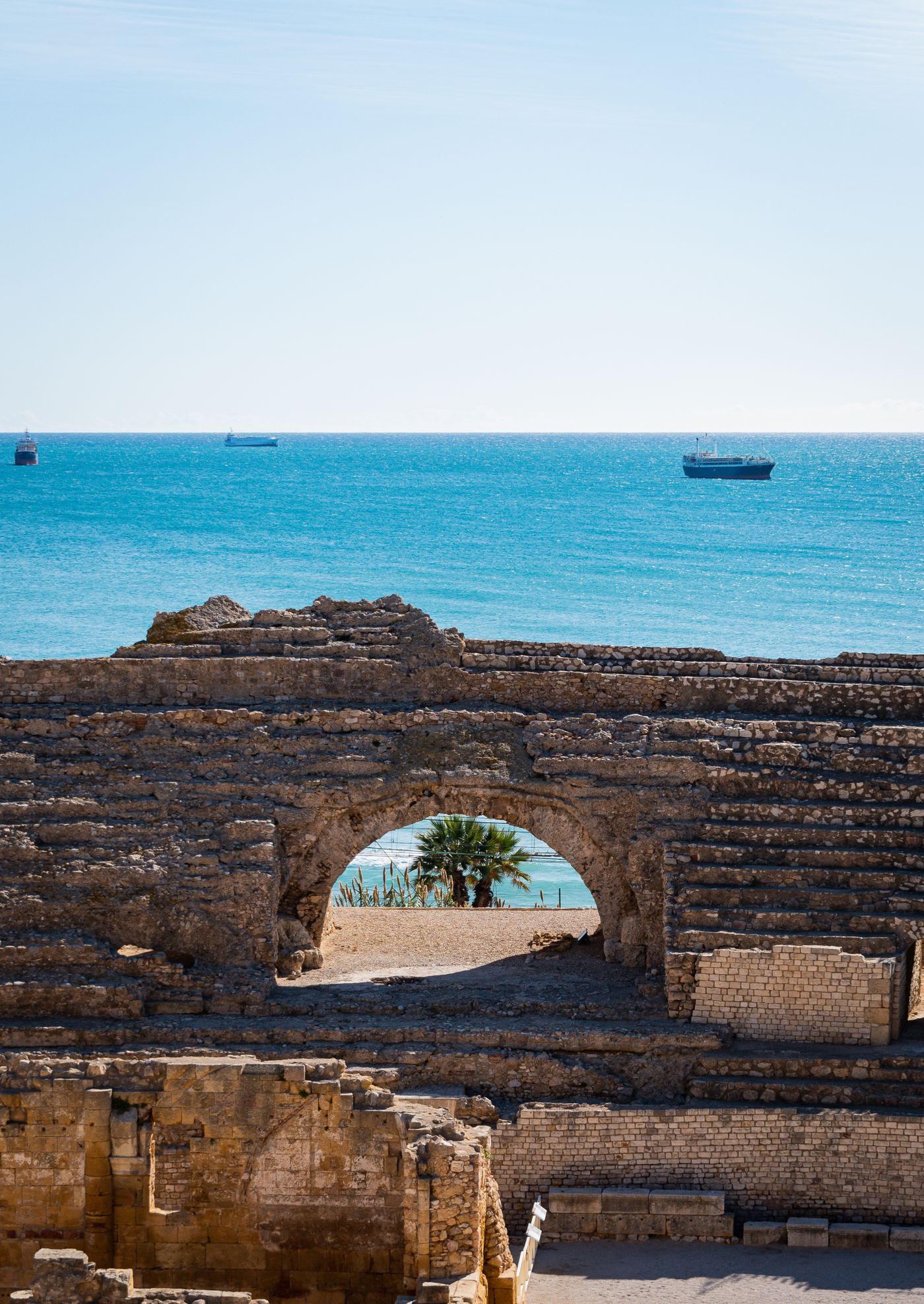
- The amphitheatre is the postcard and the argument: second-century stone seating banked above the Mediterranean, with the beach below still called El Miracle.
- The circus and praetorium burrow under the old town — vaulted chariot-course tunnels you walk through to a tower-top view over roofs and sea.
- The combined ticket bundles the municipal Roman sites for around €12 and pays for itself by the second stop; the archaeological walls walk (Passeig Arqueològic) closes the set.
- The Ferreres Aqueduct — the Pont del Diable — stands complete in pine woods just outside town, walkable across its top tier, reached by local bus or short taxi for the day’s quiet finale.

Getting there
The regional from Sants or Passeig de Gràcia hugs the coast most of the way — sit left for the sea. Tarragona’s station lands you below the old town, ten minutes’ climb from the amphitheatre gate, which is why the alarm’s station warning matters: the AVE saves twenty rail minutes and spends thirty road ones. Returns run late and frequent; the combined-ticket booth at your first Roman site sets up the whole day’s admissions in one transaction.
The day
Amphitheatre first in the morning light, per the alarm — the seating bowl against the blue is the day’s defining image and the crowds arrive by eleven. Climb into the old town for the circus vaults and the praetorium’s rooftop panorama, then the cathedral — Romanesque-to-Gothic on the Roman temple’s own platform — and lunch in the Part Alta’s lanes (the Mercat Central down the Rambla Nova does the market version). The walls walk shades the early afternoon, the Balcó del Mediterrani hands you the sea-rail view the town poses at, and the Ferreres Aqueduct closes the circuit: bus or taxi out, twenty minutes among the pines, and a two-tier Roman bridge with nobody collecting anything. Serrallo, the fishing quarter, does the seafood dinner if your train can wait.
When to go
April to June and September to October carry the walking-and-ruins weather; July–August adds beach crowds and heat the amphitheatre’s stone amplifies — mornings become policy rather than preference. Late September brings Santa Tecla, the town’s festival of castells (human towers) and processions, Tarragona at its loudest and most itself — a reason to aim or avoid depending on temperament. Winter runs mild, quiet, and slanted-gold for photographers; everything Roman stays open on trimmed hours.
Frequently Asked Questions
Is Tarragona better than a Girona day?
Different centuries: Tarragona for Rome and the sea, Girona for medieval lanes and Jewish-quarter atmosphere (documented on this network with Figueres attached). Antiquity-inclined travelers take Tarragona; both fit in a Barcelona week.
What’s actually included in the combined ticket?
The municipal set — amphitheatre, circus-praetorium, forum, walls walk, and companions — on one ~€12 ticket valid across the day. The cathedral and the National Archaeological Museum (when open) tickets run separate and modest.
Can I swim below the amphitheatre?
El Miracle beach sits right there and summer makes the ruins-then-swim sequence irresistible and correct. Platja Llarga up the coast runs longer and calmer for the committed beach half-day.
How do I reach the aqueduct?
City bus lines toward Sant Salvador stop near the Pont del Diable park, or a taxi runs it in ten minutes; the walk from the stop is signed and flat. Crossing the top is permitted, free, and the day’s best quiet ten minutes.
What are castells?
Human towers — Catalonia’s UNESCO-listed festival art, and Tarragona is a heartland: teams build six to nine human stories with a child topping out. Santa Tecla week or the biennial October competition are the full-voltage versions.